Trump’s Davos Arrival & Diplomatic Atmosphere
- OTM News

- Jan 22
- 3 min read
Trump’s Davos Arrival & Diplomatic Atmosphere
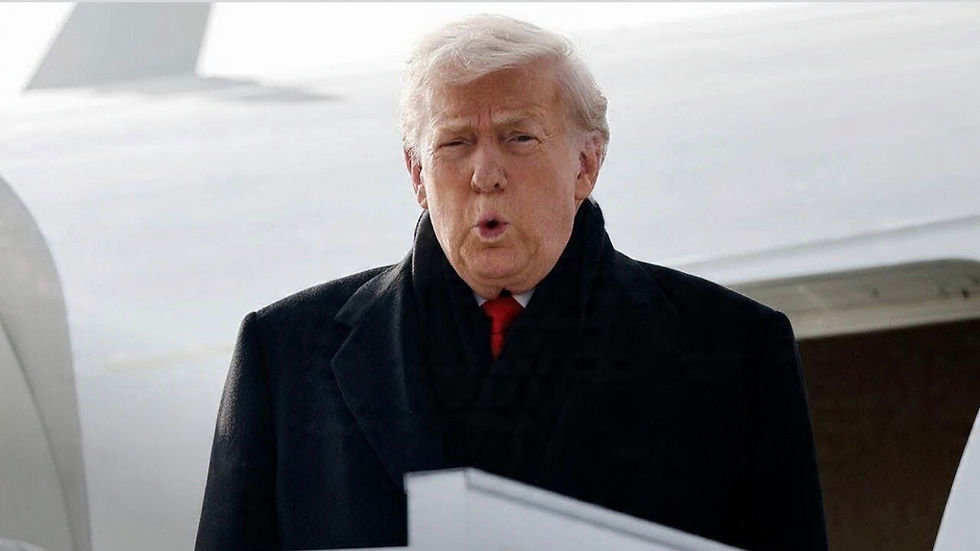
President Trump arrived in Davos for the World Economic Forum amid noticeably cool diplomatic reception. Multiple social media posts and unverified reports circulated showing Trump’s arrival was not met by an official welcoming delegation or ceremony, a break from customary protocol for a U.S. head of state visiting a major international forum. Some coverage noted a “silent arrival” with no formal greeting by Swiss hosts or international leaders upon landing.
This conspicuous lack of fanfare contrasts sharply with how global leaders’ visits are typically staged, and analysts suggest it reflects strained European perceptions of U.S. policy under Trump—particularly after his recent threats around Greenland and trade actions.
Protests and public pushback also greeted Trump’s arrival in the region, with anti-Trump messages reportedly carved into snow visible near the airstrip, signaling some local political resistance to his attendance.
Trump’s Central Davos Message — Greenland & Global Order
Greenland Dispute and Transatlantic Tensions
Trump spent much of his Davos speech and bilateral meetings focused on his controversial stance over Greenland, a semi-autonomous Danish territory. He reiterated the U.S. interest in securing strategic rights over the island—framing it as essential to Arctic security—while clarifying he would not use military force.
Earlier this week, Trump had threatened tariffs on European countries opposing U.S. aims involving Greenland, which raised fears of a transatlantic trade rift. But in Davos he backed down from those tariff threats after meeting with NATO officials, instead announcing a framework for a “future deal” that he claims will benefit U.S. and allied security interests.
This episode has triggered broader discussion about EU strategic autonomy, as European capitals interpret U.S. pressure tactics—economic leverage tied to geopolitical aims—as confirming the need for independent European defense and diplomatic capabilities.

Global Leadership Tone
Trump’s address to WEF was combative and unilateral in tone—highlighting U.S. strength while challenging allies’ commitments on security and trade. Analysts suggest his rhetoric deepened concerns among some European leaders about Washington’s reliability as a partner.
New Initiatives: Board of Peace & Gaza Plan
Beyond Greenland, Trump used the Davos platform to formally launch an international “Board of Peace” initiative aimed at overseeing post-conflict governance and reconstruction, beginning with Gaza. He positioned the board as complementary to the United Nations, though some leaders remained skeptical of its structure and membership.
This was a main theme in discussions alongside the Greenland issue and reflects Trump’s effort to shape new multilateral mechanisms under U.S. leadership—another potential point of friction with European and UN diplomacy.
European & Global Reactions Within 24 Hours
European Leadership Response
European leaders used their own WEF appearances to contextualize Trump’s foreign policy moves within broader global trends:
German Chancellor Friedrich Merz warned that the world is entering a new era of “great power politics”, citing rising U.S.–Europe tensions and challenging Russia and China’s geopolitical roles.
Other European figures have emphasized strategic independence, rejecting the notion of yielding to coercive tactics over Greenland.

Ukraine, Russia, and Broader Security Talks
Simultaneously, Ukrainian President Volodymyr Zelensky spoke forcefully on the need for strong collective action against Russian aggression, underscoring broader security issues at Davos and stressing that European defense unity is essential.
Market & Strategic Impact in the Last 24 Hours
In financial markets and policy circles, Trump’s shift away from tariffs and reassurance against military action over Greenland helped stabilize some investor concerns. However, geopolitical risk premiums remain elevated, reflecting broader unease with the U.S.–Europe dynamic and emerging power competition conditions.
Conclusion: A Watershed Davos Visit
In the last 24 hours, Trump’s Davos visit has revealed and reinforced fractures in the transatlantic alliance:
A muted or absent diplomatic greeting symbolized uneasy relations.
His Greenland agenda and tariff threats have compelled European leaders toward greater strategic autonomy.
New initiatives like the Board of Peace signal a reshaping of U.S. global engagement, but not without contention from allies.
Overall, Davos this year has become not just an economic forum, but a flashpoint for redefining global order amidst U.S.–Europe tensions, Arctic strategy, and competing visions for collective security.


Comments